Description
Trill is a family of touch sensors that launched on Kickstarter in 2019. Inspired by the way we use our hands to interact with the world, Trill sensors use capacitive touch technology to make it easy to add high-resolution, natural touch interaction to your interactive projects. Find out everything you need to know about using Trill at learn.bela.io/trill
Trill was designed for Bela Audio Systems but is compatible with any platform that supports I2C communication, such as Arduino, Raspberry Pi, Teensy and more. Every Bela and Bela Mini system ships with a Trill library as well as lots of examples (including visualisations using our GUI integration). Libraries and examples for other platforms are available on the Github repo.
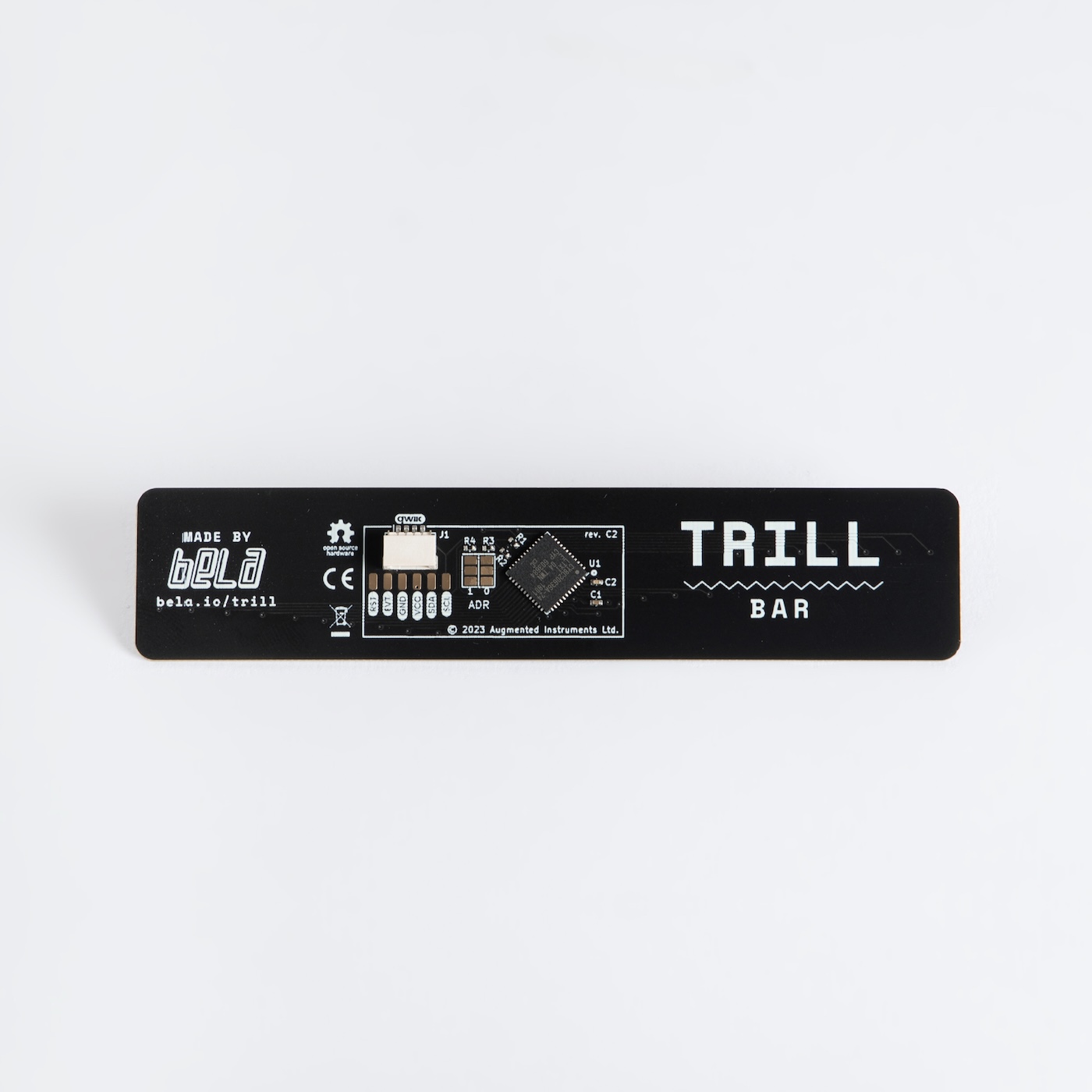
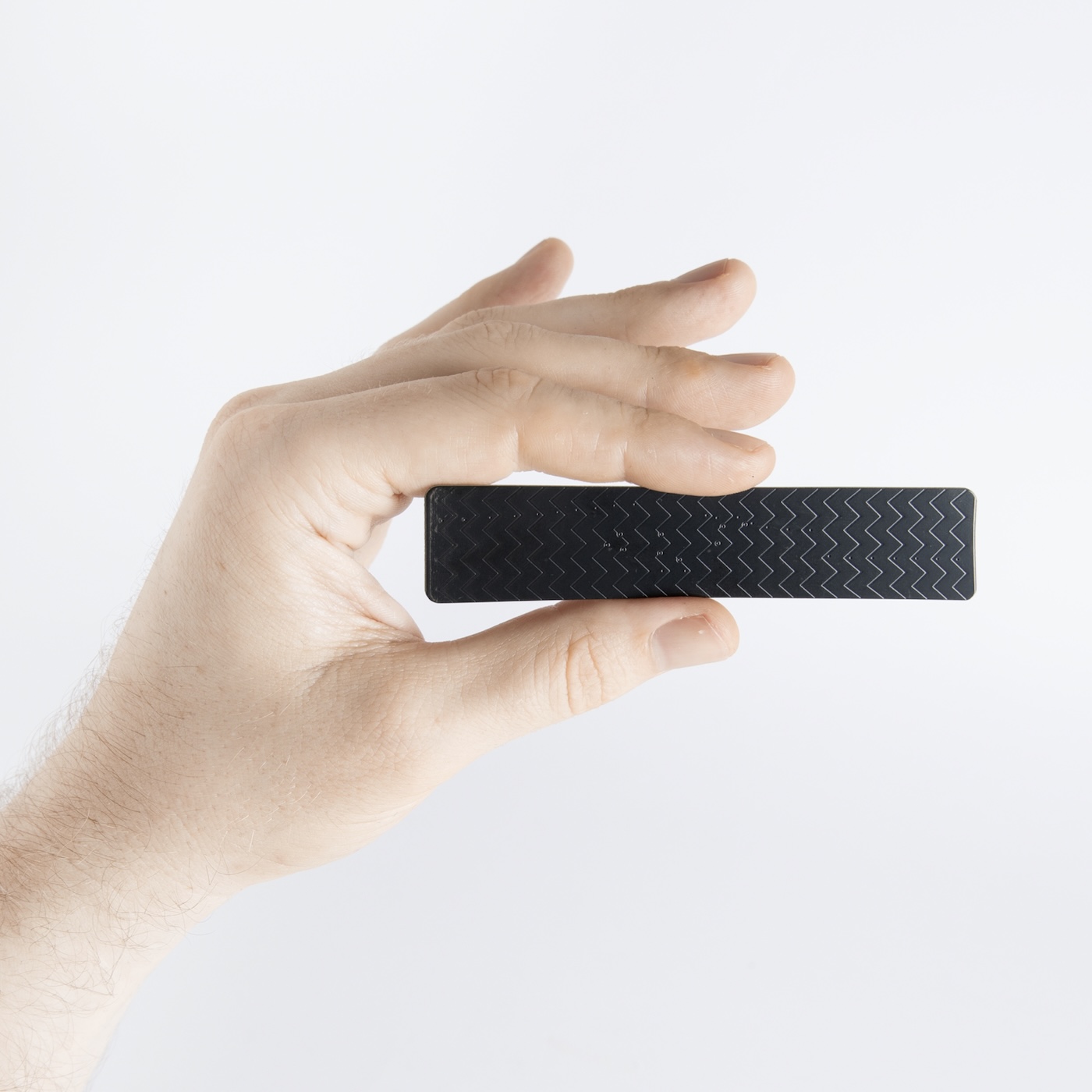
Trill Bar
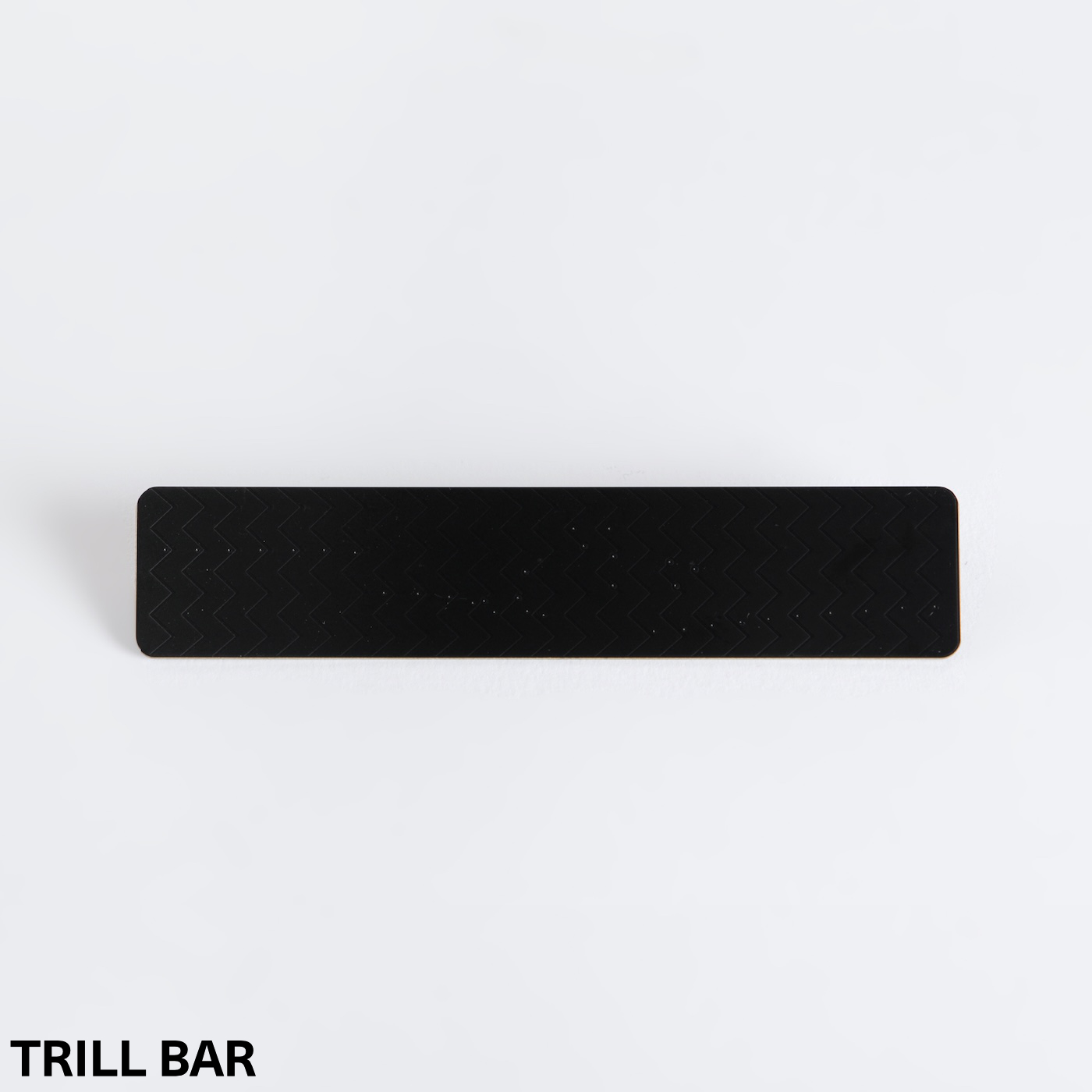
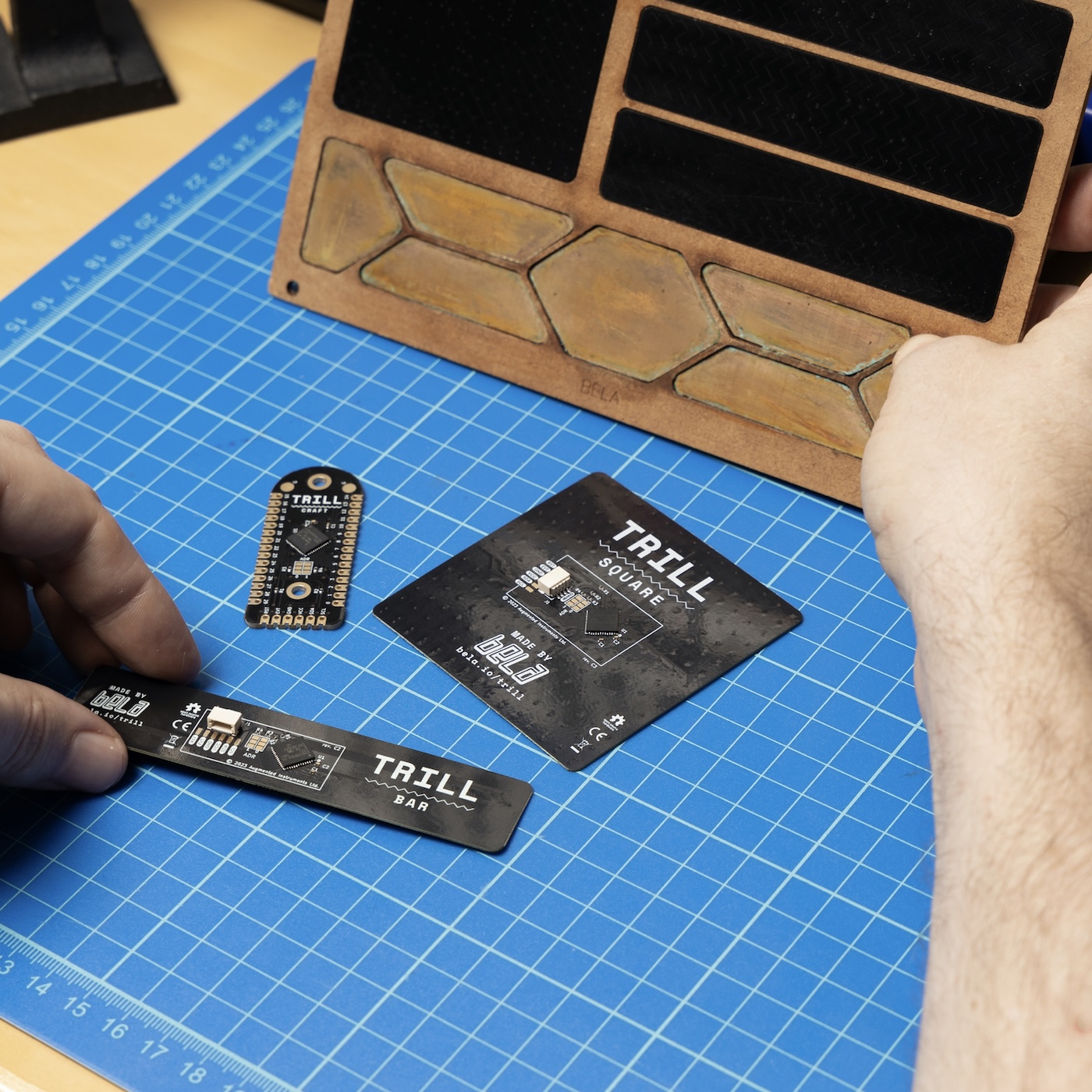
Trill Bar is a multitouch slider that can detect up to five simultaneous touches along one axis. As well as sensing finger positions, this sensor also detects touch size for each finger, allowing it to act like a pressure sensor. Trill Bar uses a QWIIC connector, and includes a QWIIC-to-male-pin cable so you can connect it to Bela, a microcontroller, or a breadboard and start prototyping straight away.
Dimensions: 101.6 mm x 21.5 mm
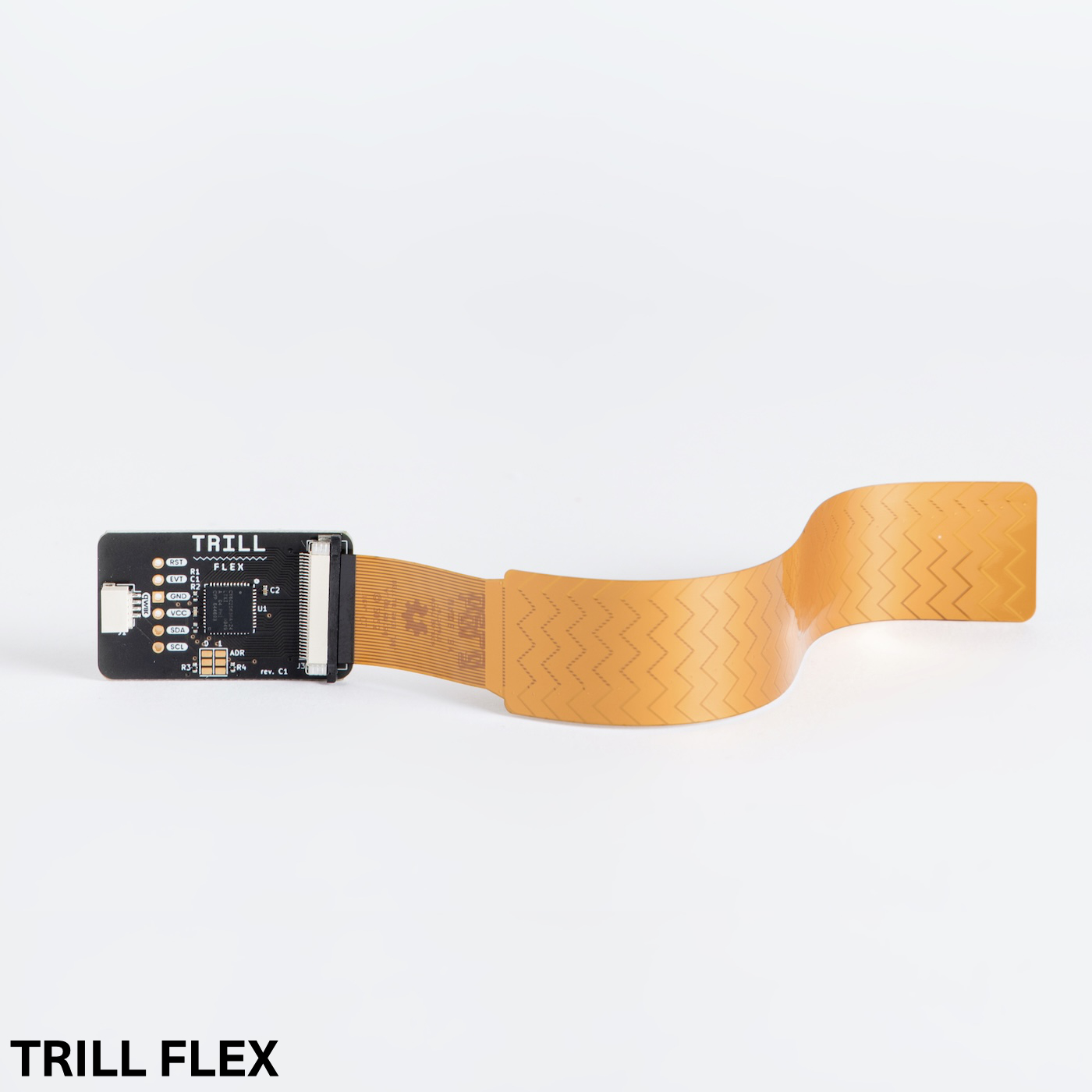
Trill Flex
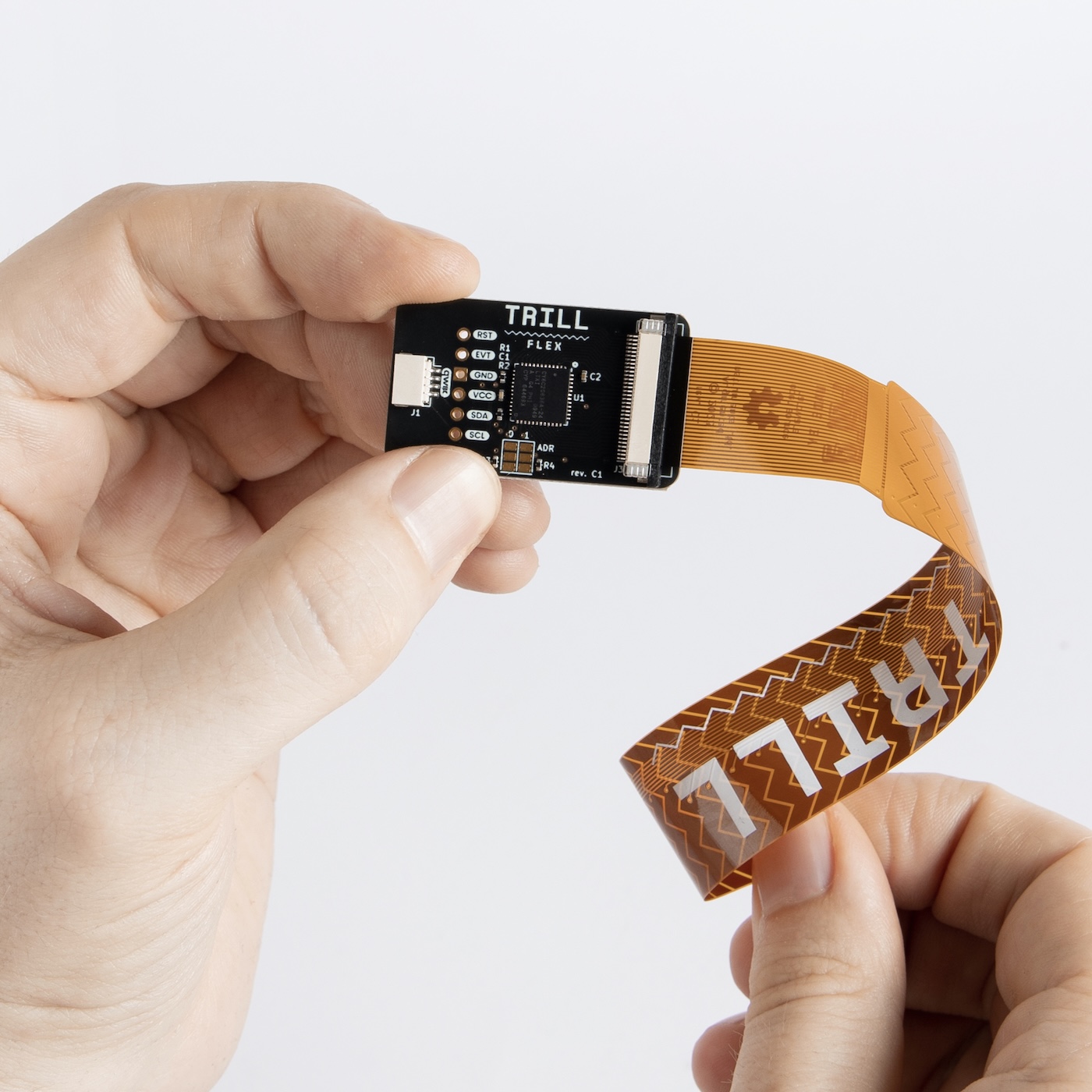
Trill Flex allows you to bring flexible sensing to your interactive projects.
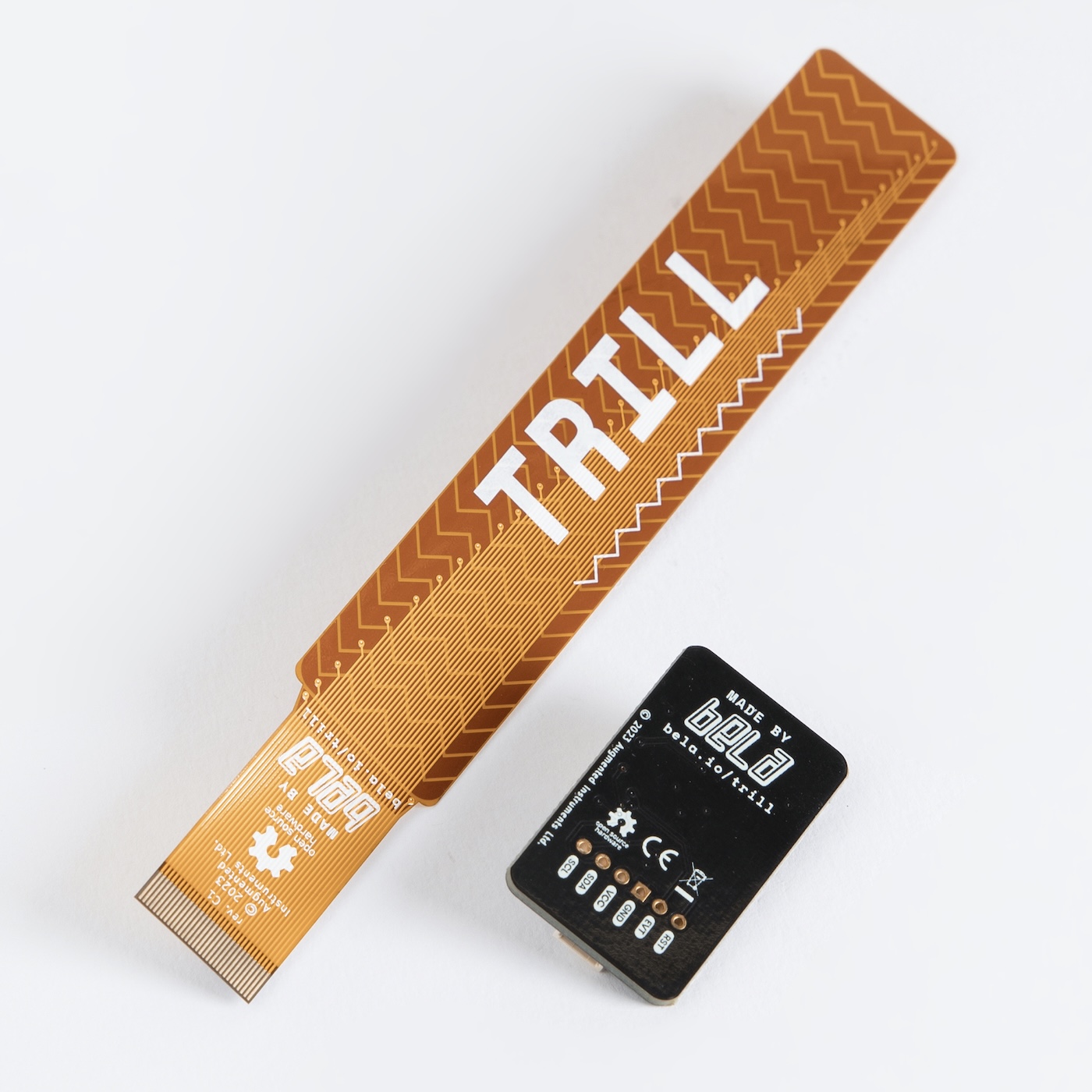
There are two parts to Trill Flex: the base (where you’ll find the Trill chip and a high-density connector) and the flexible sensor (made from flex PCB). Trill Flex’s flexible sensor easily conforms to curves, bends, corners and more, giving you the freedom to create projects with touch surfaces that are virtually any shape.
The flexible sensor is detachable, meaning that you can swap it out for a flexible sensor that you created. You can find the editable plans for the Trill Flex sensor on Github – just download and edit them. See the guide on designing your own flexible sensors for tips and tricks.
Trill Flex comes with a flexible single-axis bar sensor that detects multiple touches. Trill Flex uses a QWIIC connector to connect to your Bela system, breadboard or microcontroller. A QWIIC-to-pin cable is included, so snap the base to the sensor, plug it in, and start prototyping your new flexible project!
Trill Craft
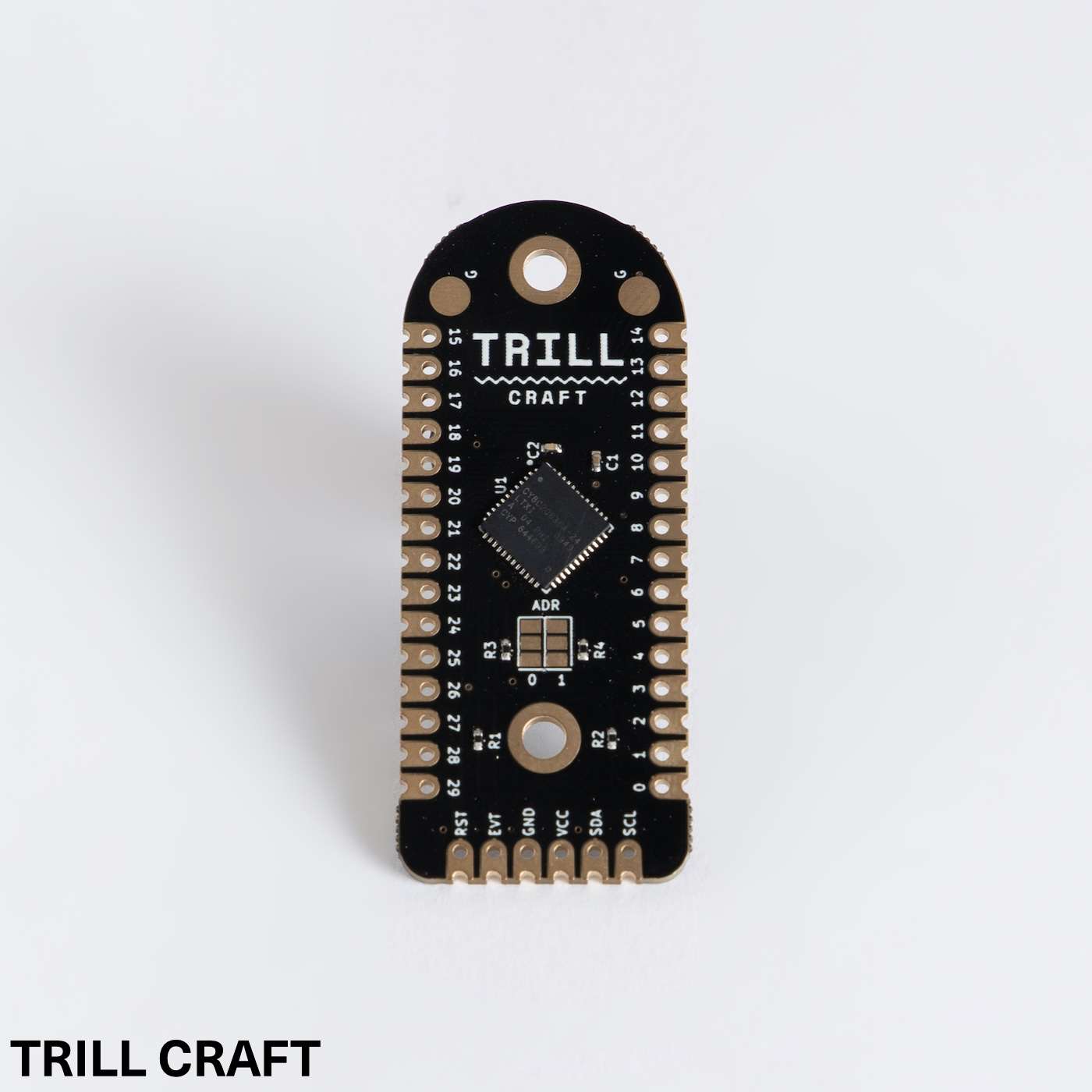
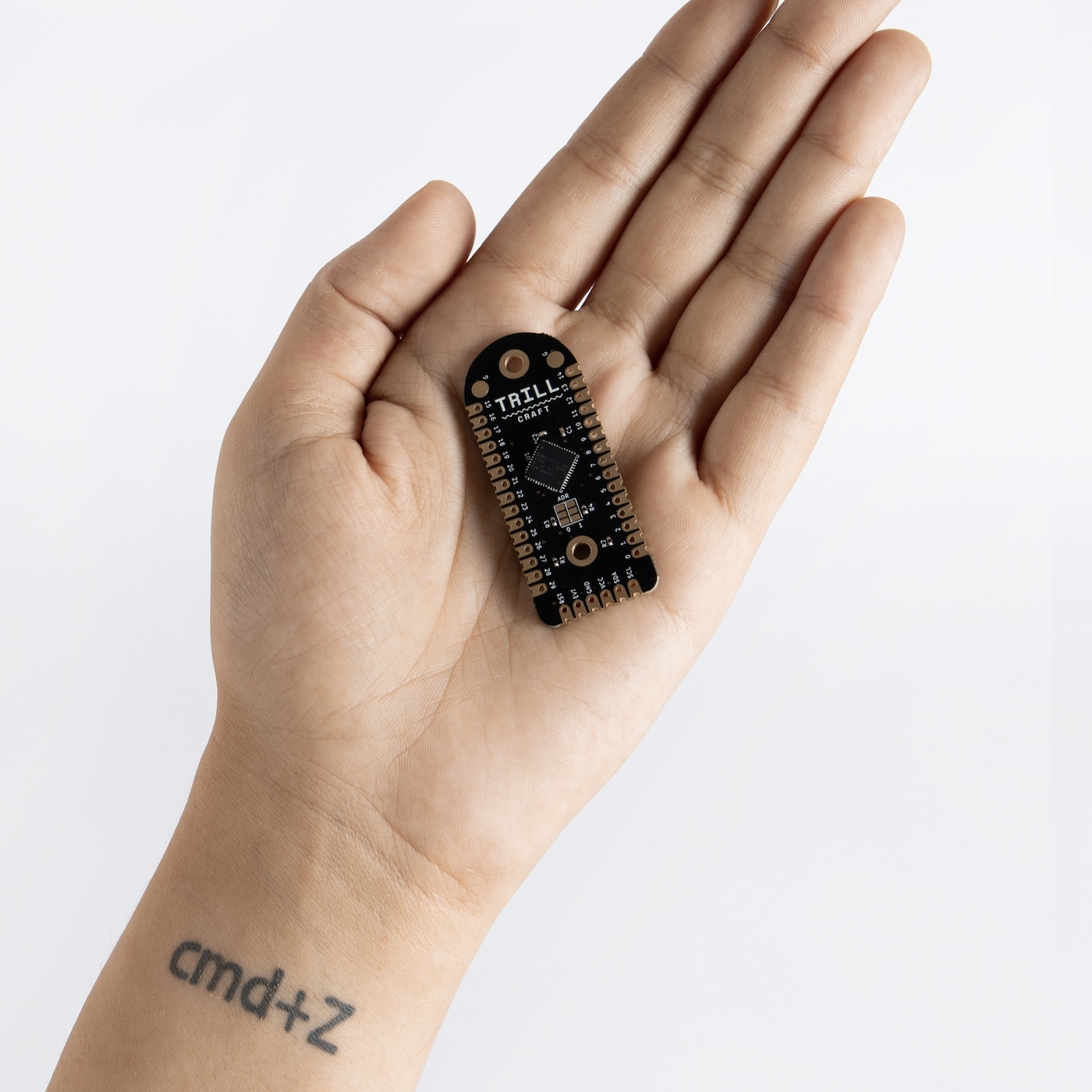
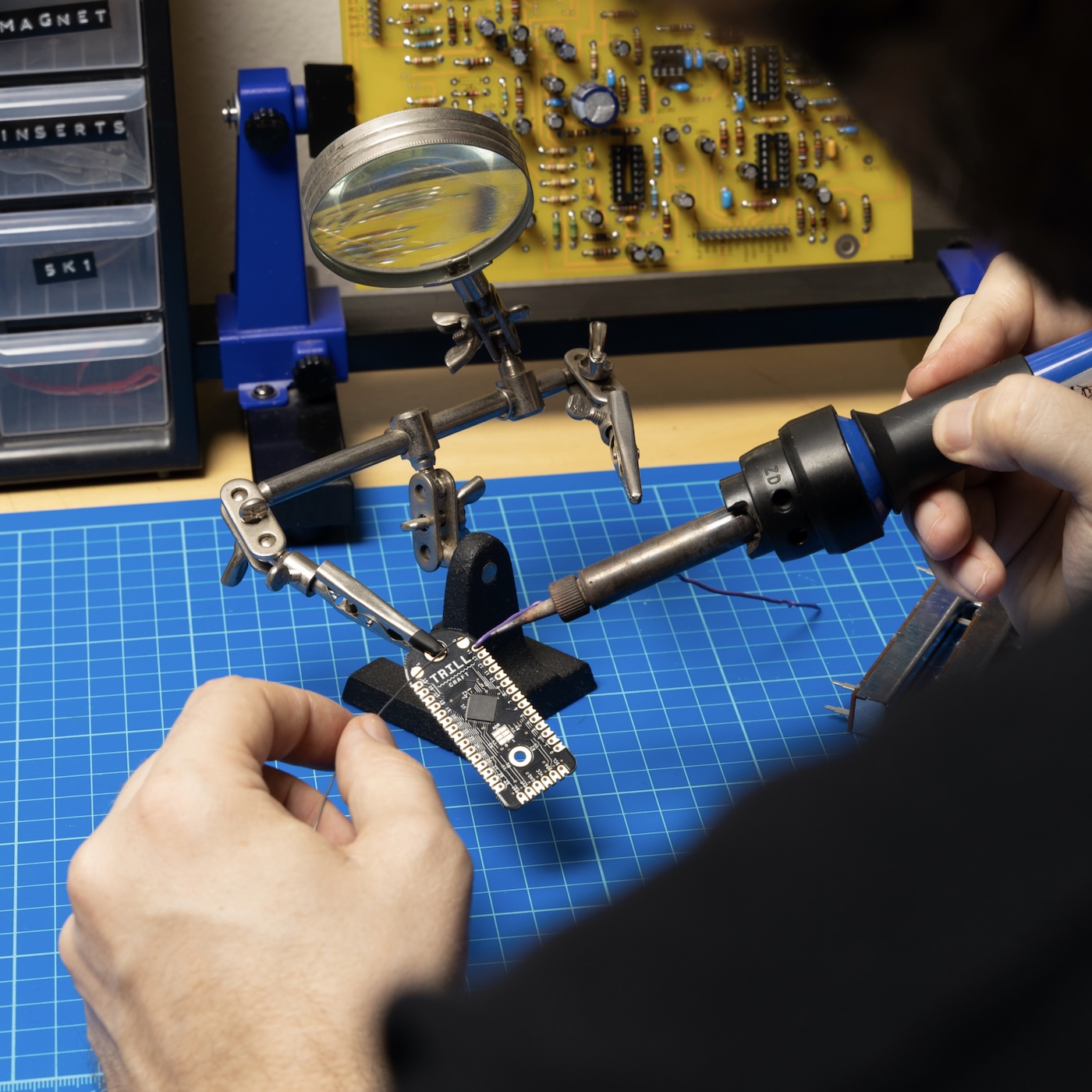
Trill Craft is a 30-channel breakout board that lets you make your own touch interfaces out of anything conductive. Trill Craft is perfect for crafting complex interfaces from conductive fabric, copper tape, metal, wire, fruit, water, and any other conductive material. Each of Trill Craft’s 30 channels of capacitive sensing offer variable readings, and multiple boards can be chained together to create interfaces with hundreds of channels of capacitive touch. Trill Craft comes with an unsoldered right angle pin header for the I2C pins so you can connect the board to Bela or your system of choice.
Check out the guide for working with Trill Craft.
Dimensions: 52.0 mm x 21.0 mm.
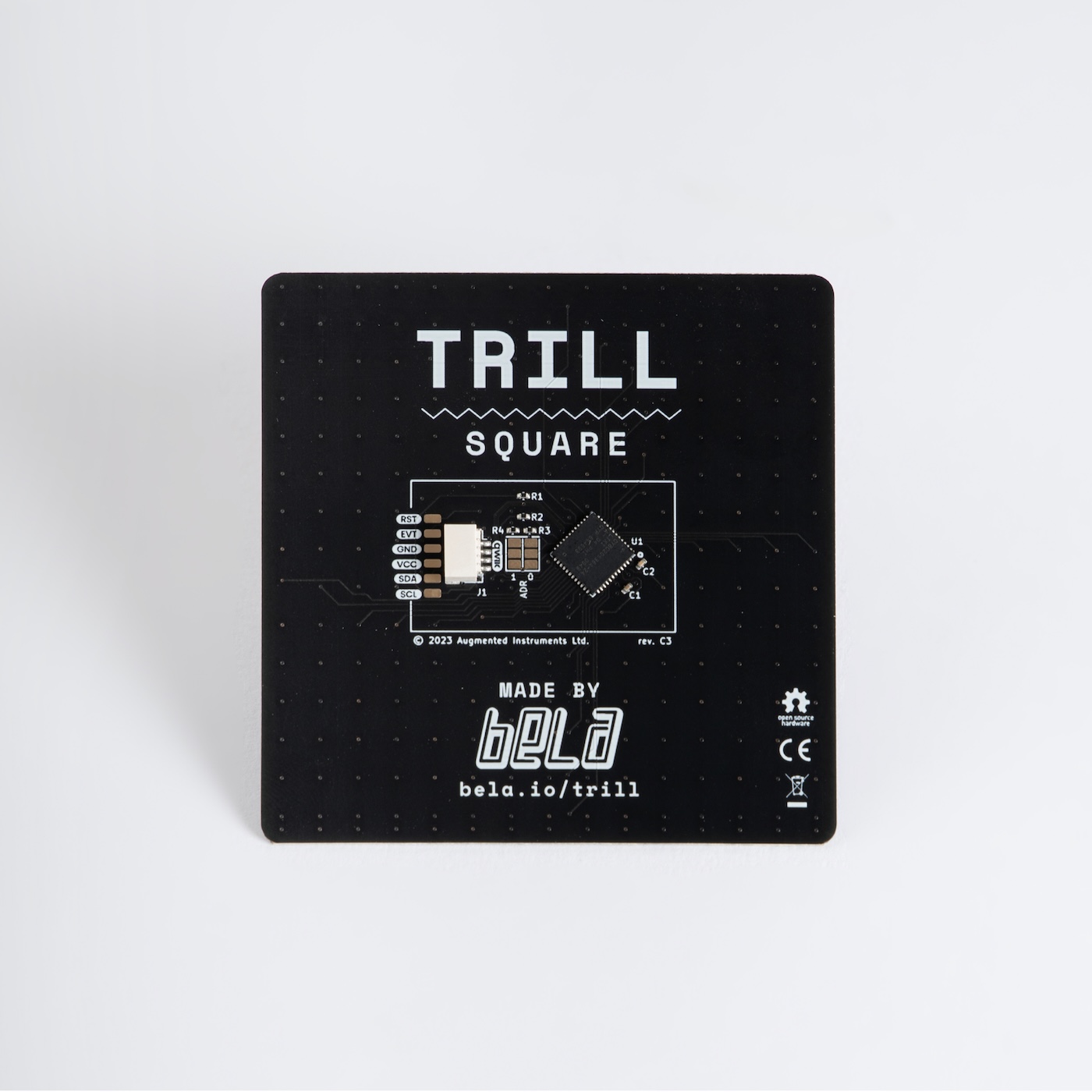
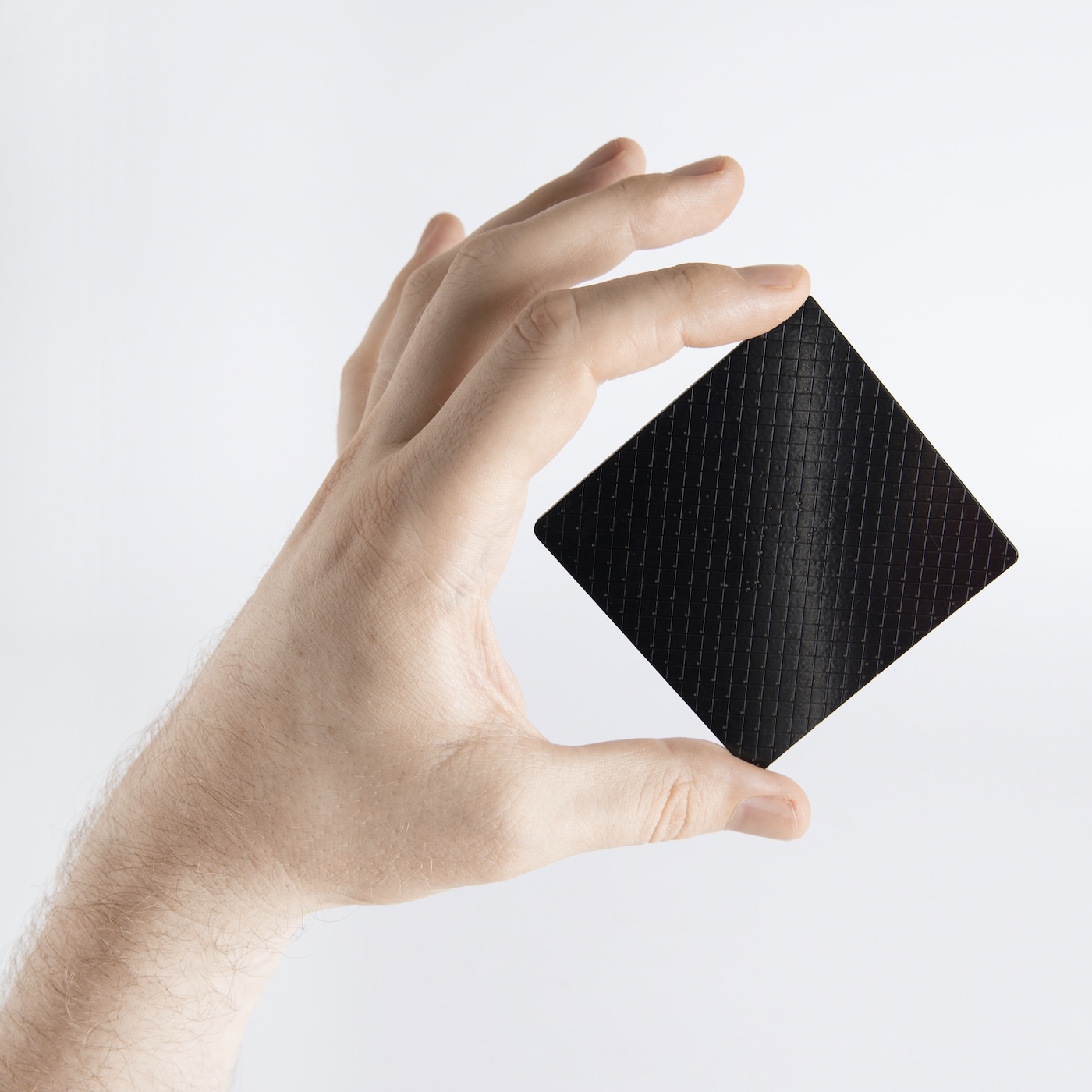
Trill Square
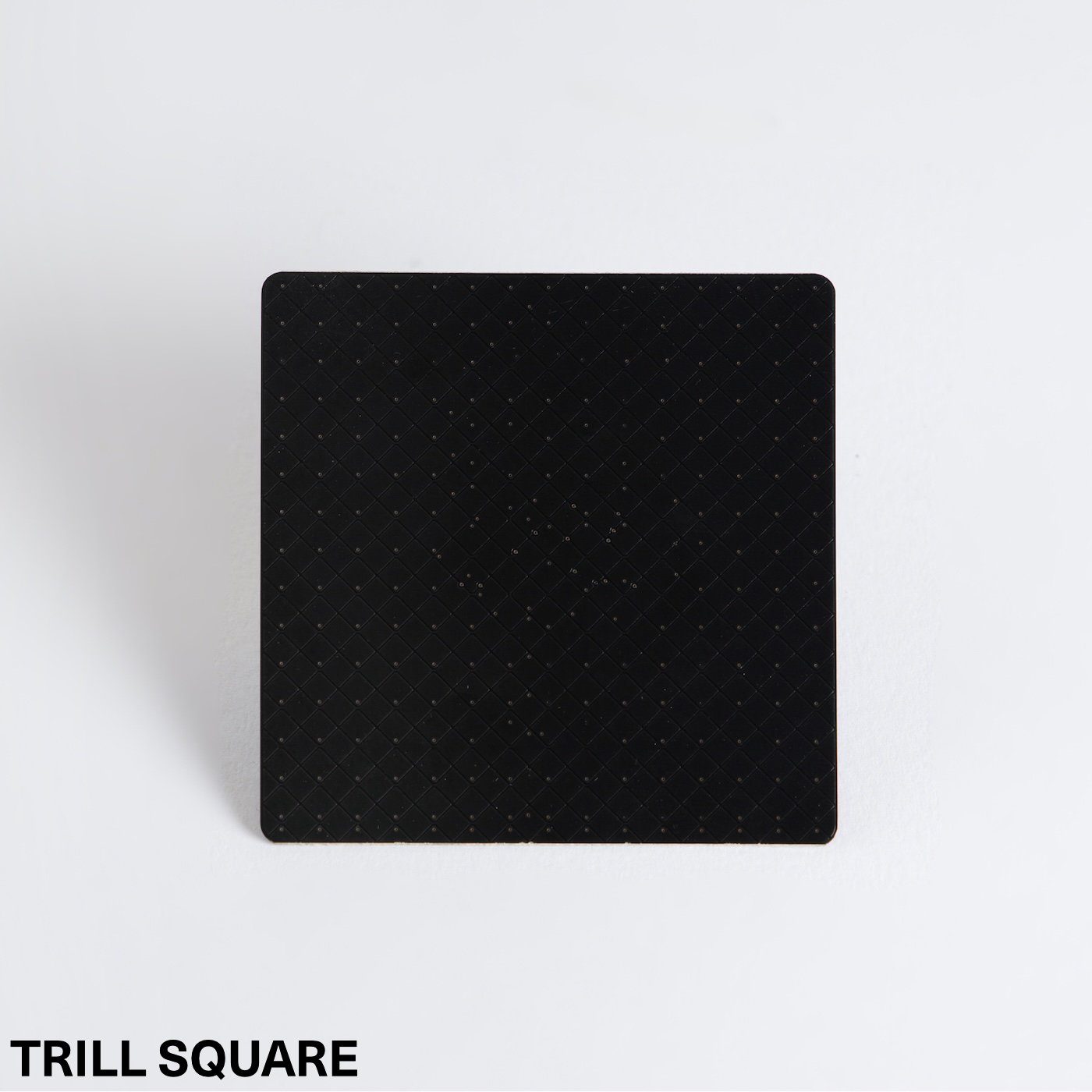
Trill Square is a x/y touch pad that senses the position of one touch across two axes, as well as touch size – ideal for interfaces and projects that require a single touch to control two parameters. Trill Square uses a Grove connector, and includes a Grove-to-male-pin cable so you can connect it to Bela, a microcontroller, or a breadboard and start prototyping straight away.
Dimensions: 69.0 mm x 69.0 mm
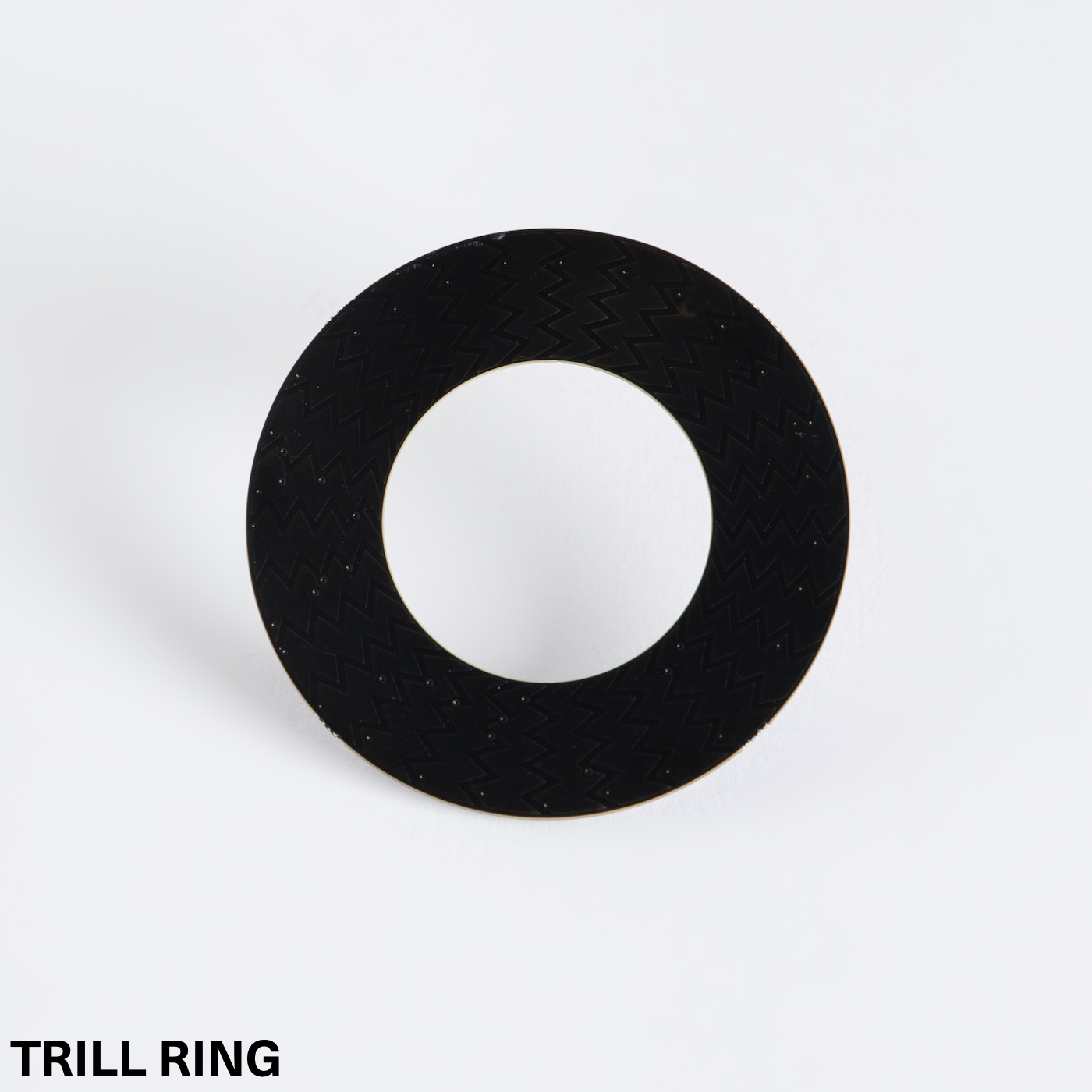
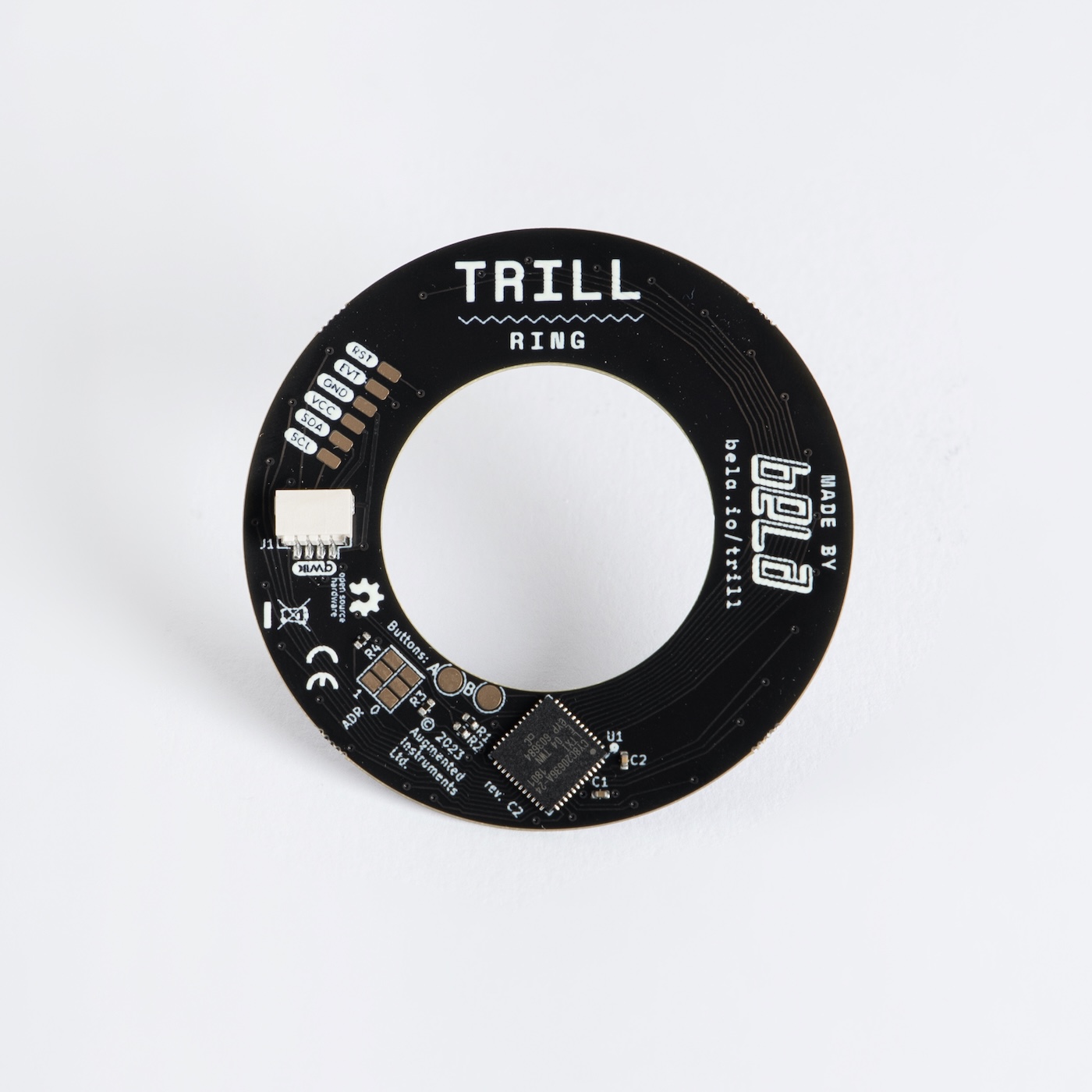
Trill Ring
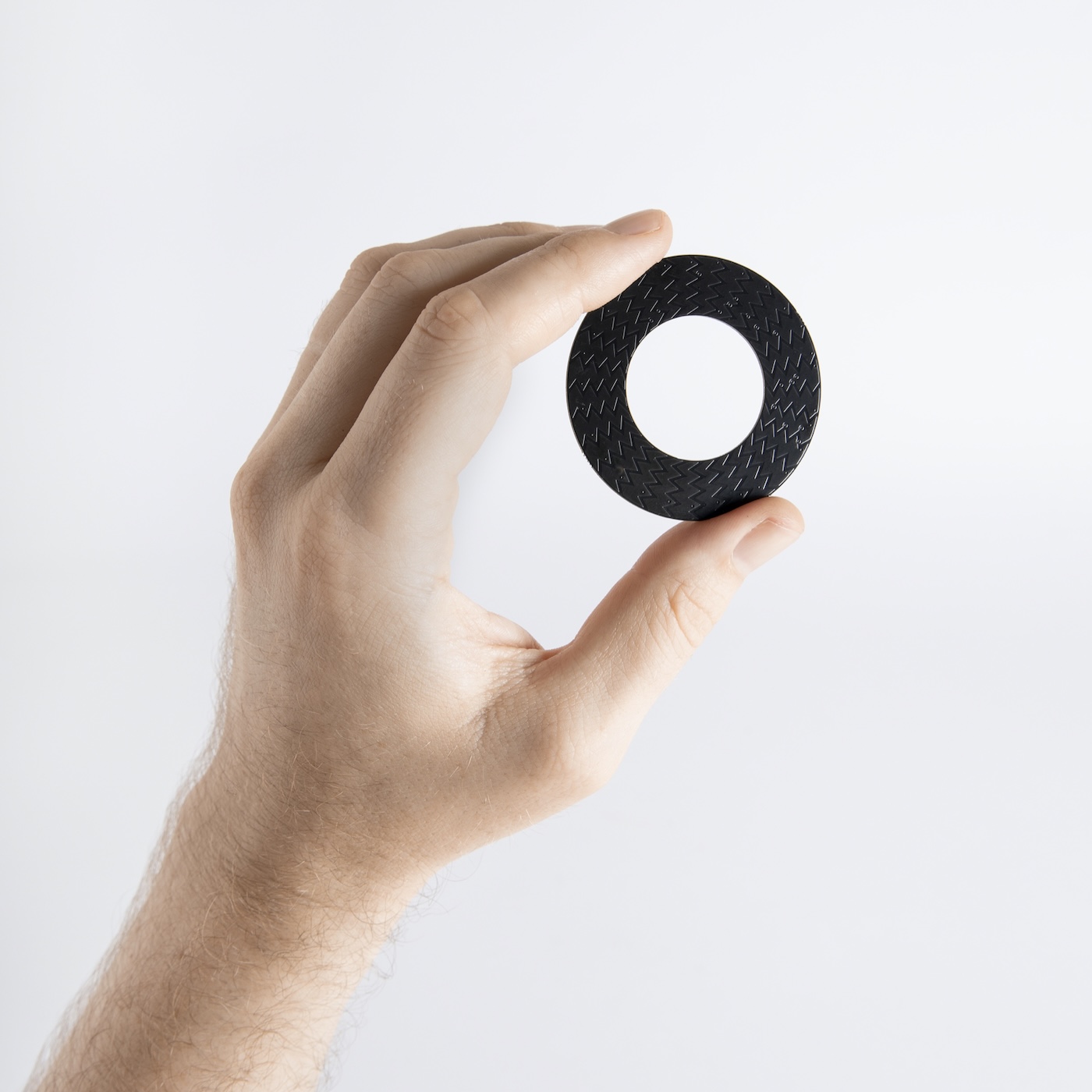
Trill Ring is a one-axis circular slider that can detect up to 5 simultaneous touches as well as touch size. Trill Ring is the perfect controller for varying filters, sequencers, frequencies and more. Want to add visual feedback and a button? Trill Ring is designed to fit within a Neopixels ring, and fits an arcade button in the central hole. Trill Ring uses a QWIIC connector, and includes a QWIIC-to-male-pin cable so you can connect it to Bela, a microcontroller, or a breadboard and start prototyping straight away.
Dimensions: 52.0 mm (outer diameter); 28.2 mm (inner diameter)
Trill Hex
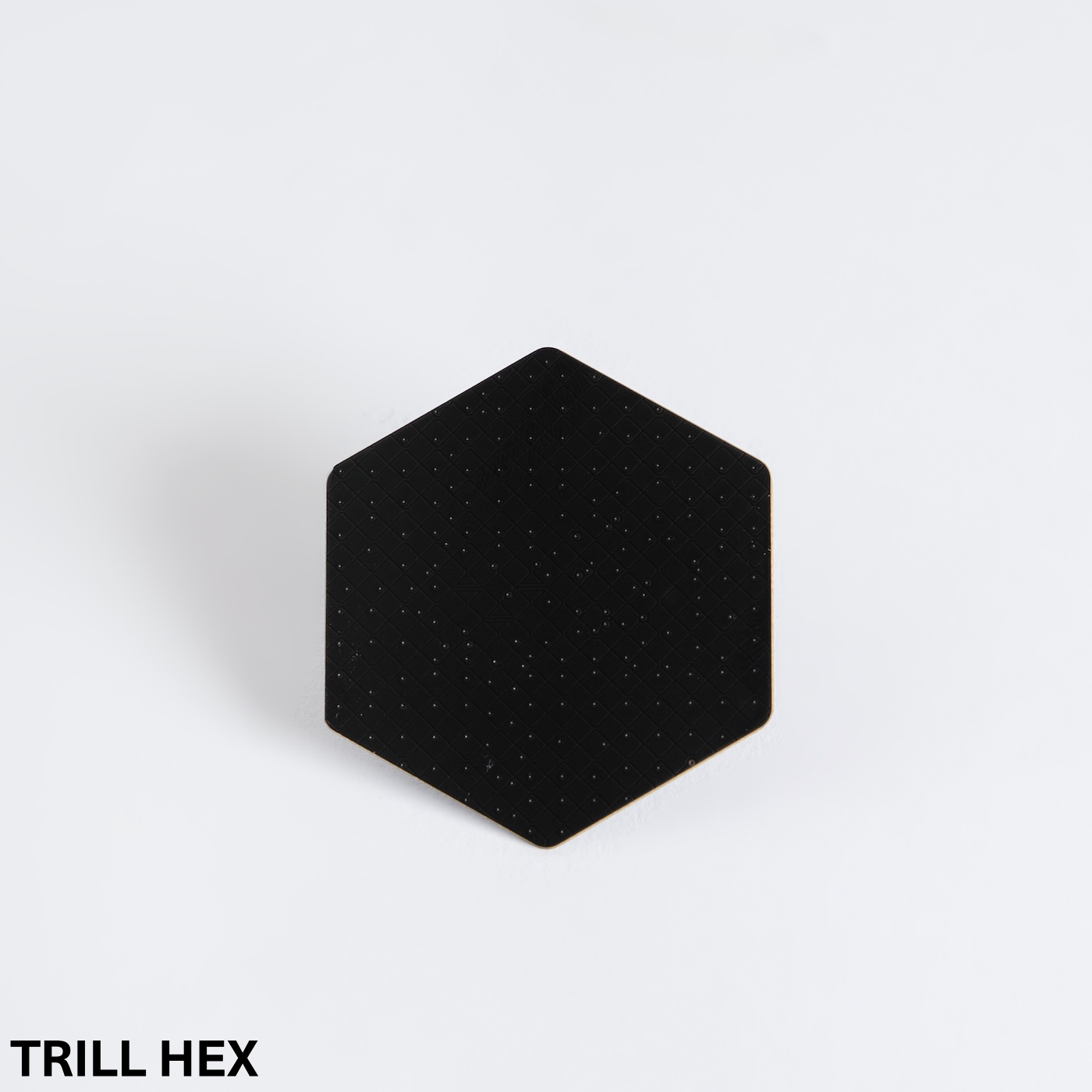
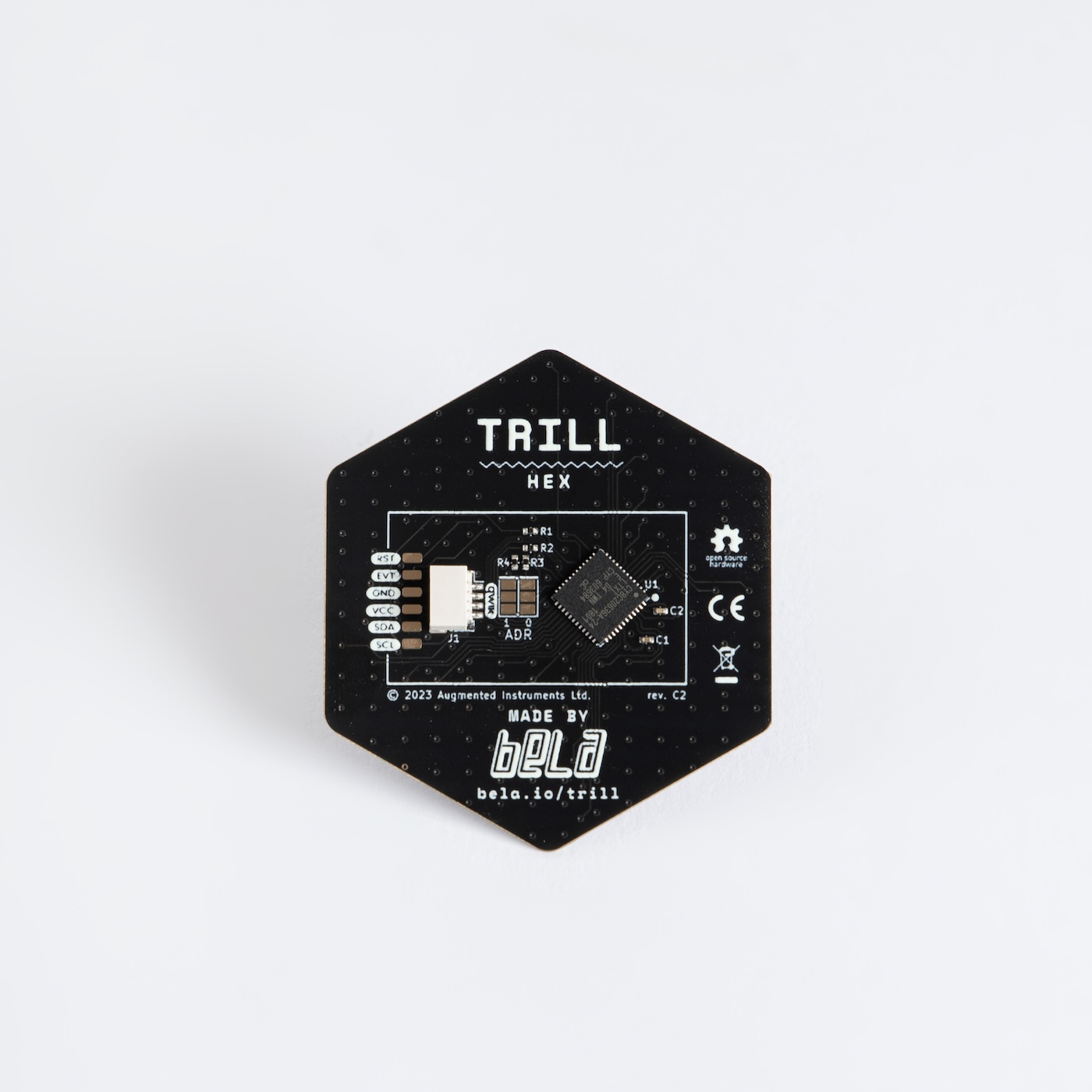
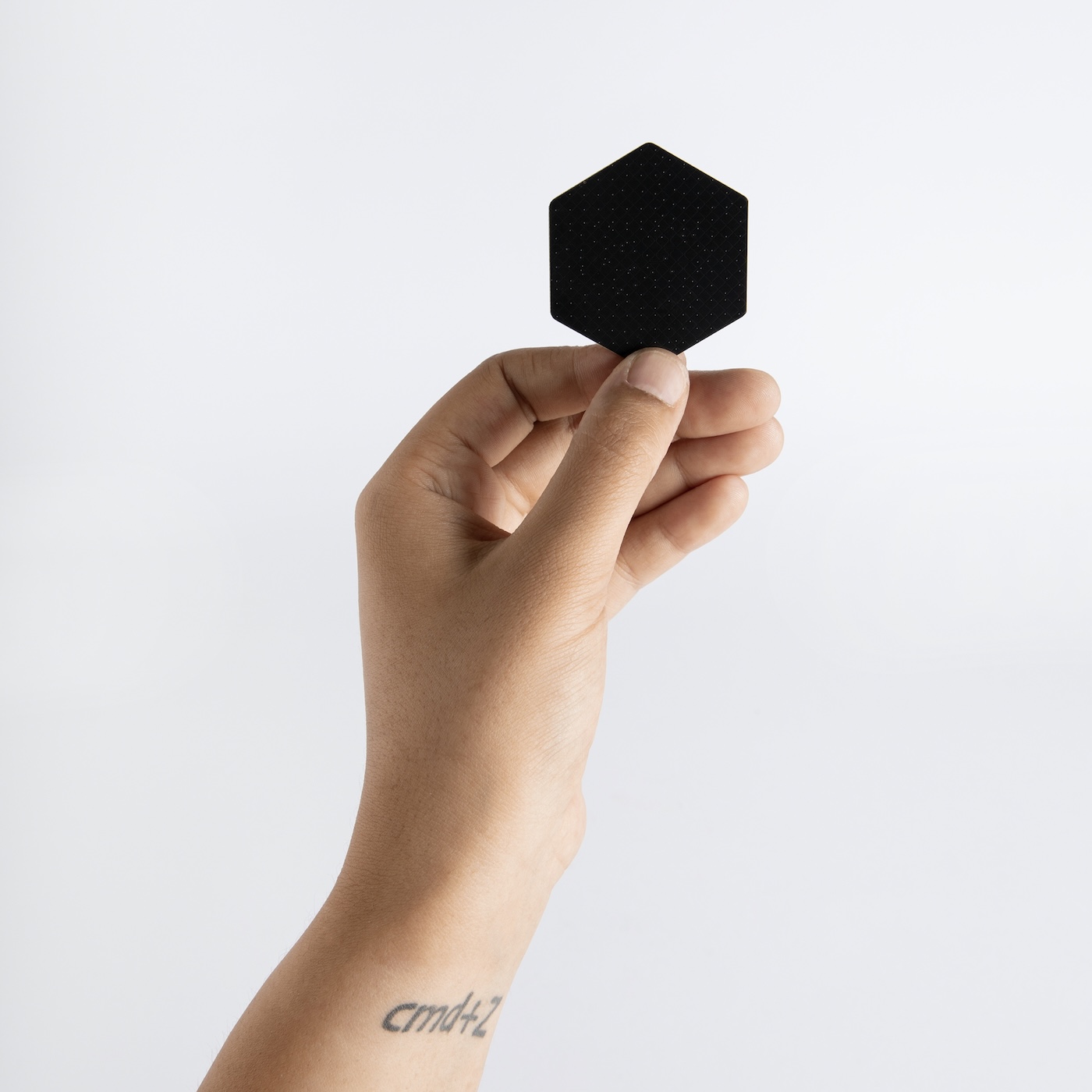
Trill Hex is a hexagonal, 2-axis x/y sensor which also senses touch size. Its hexagonal shape makes it ideal for experimenting with tessellation and creating isomorphic keyboards. Trill Hex uses a QWIIC connector, and includes a QWIIC-to-male-pin cable so you can connect it to Bela, a microcontroller, or a breadboard and start prototyping straight away.
Dimensions: 46.5 mm (edge to edge); 53.0 mm (corner to corner)
Trill Hub
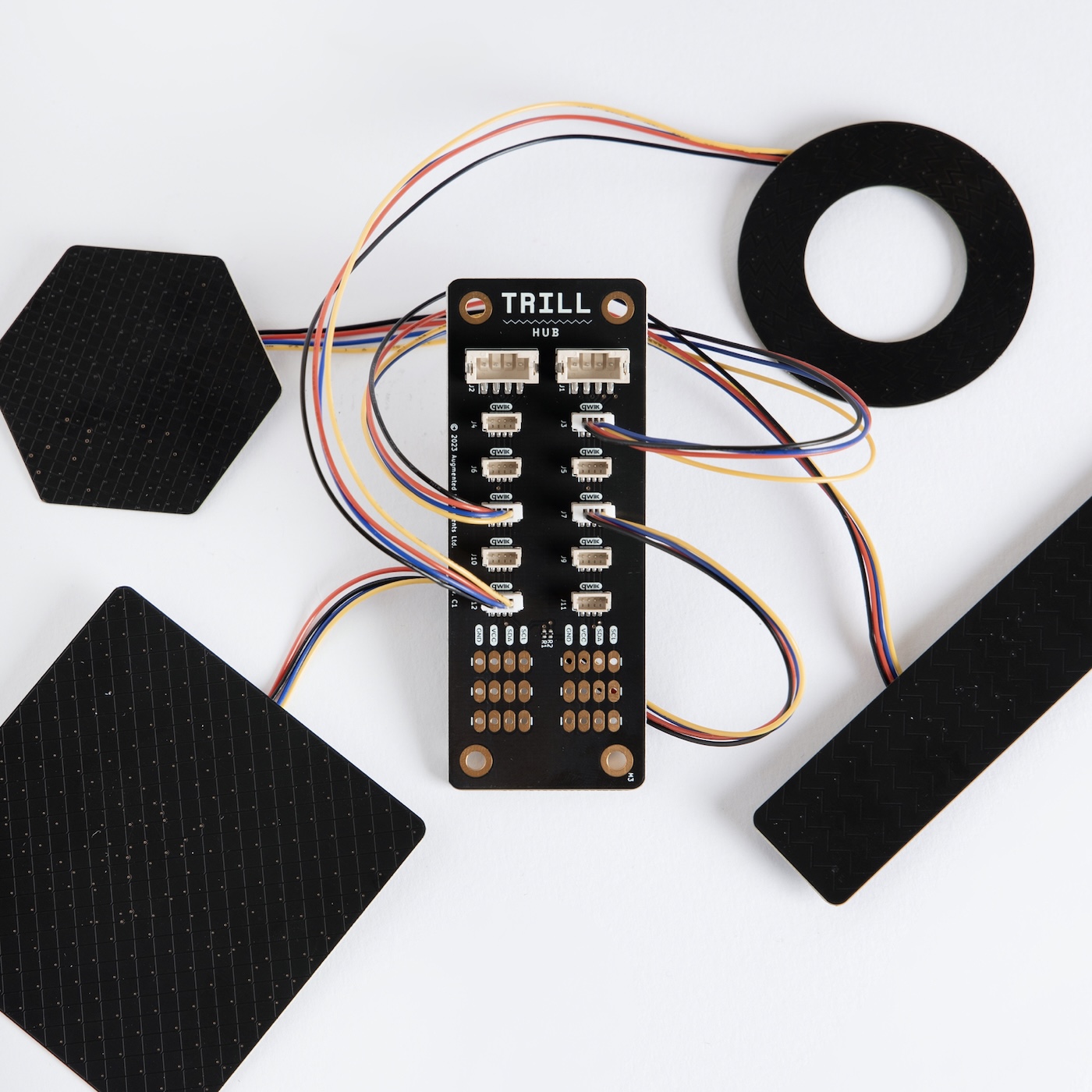
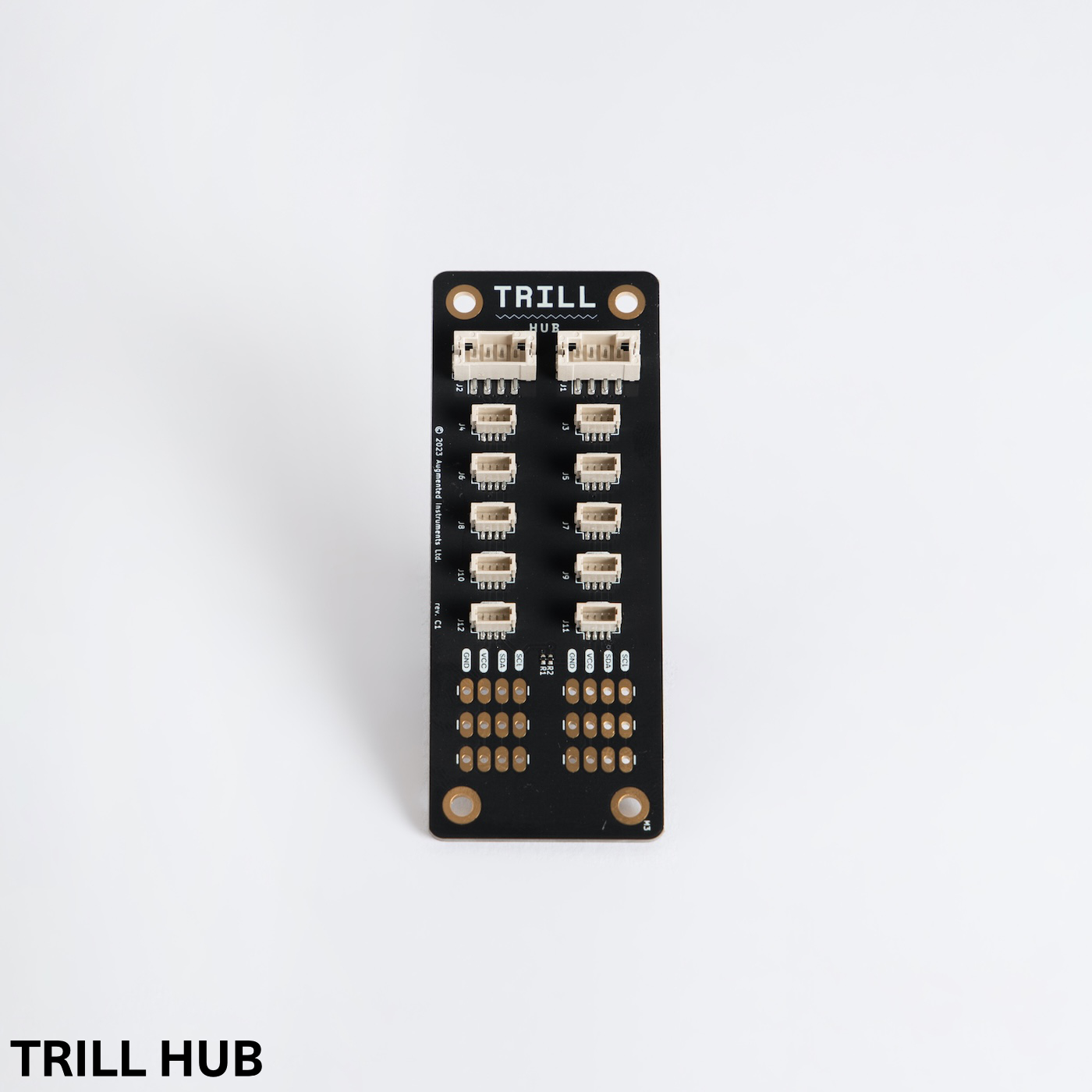
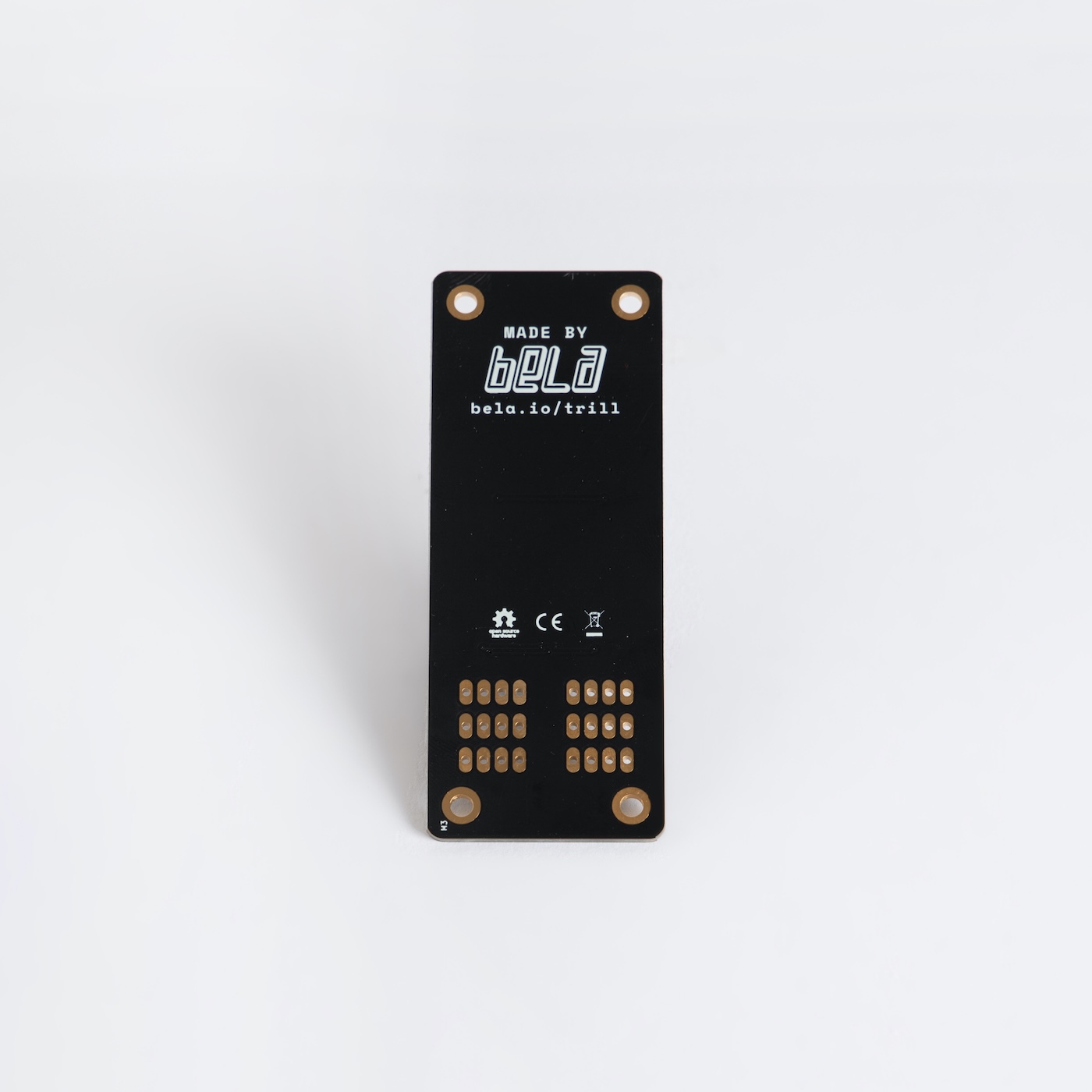
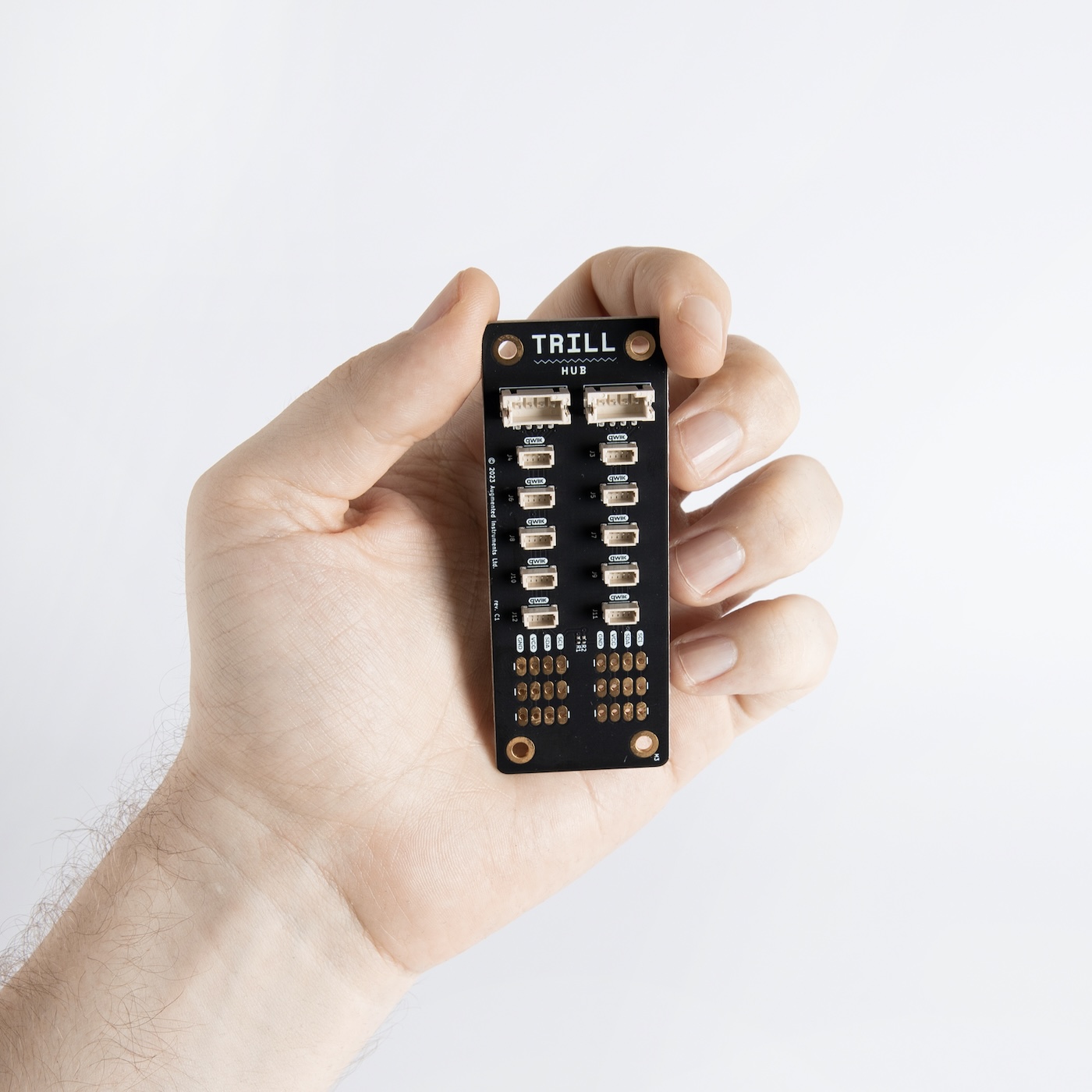
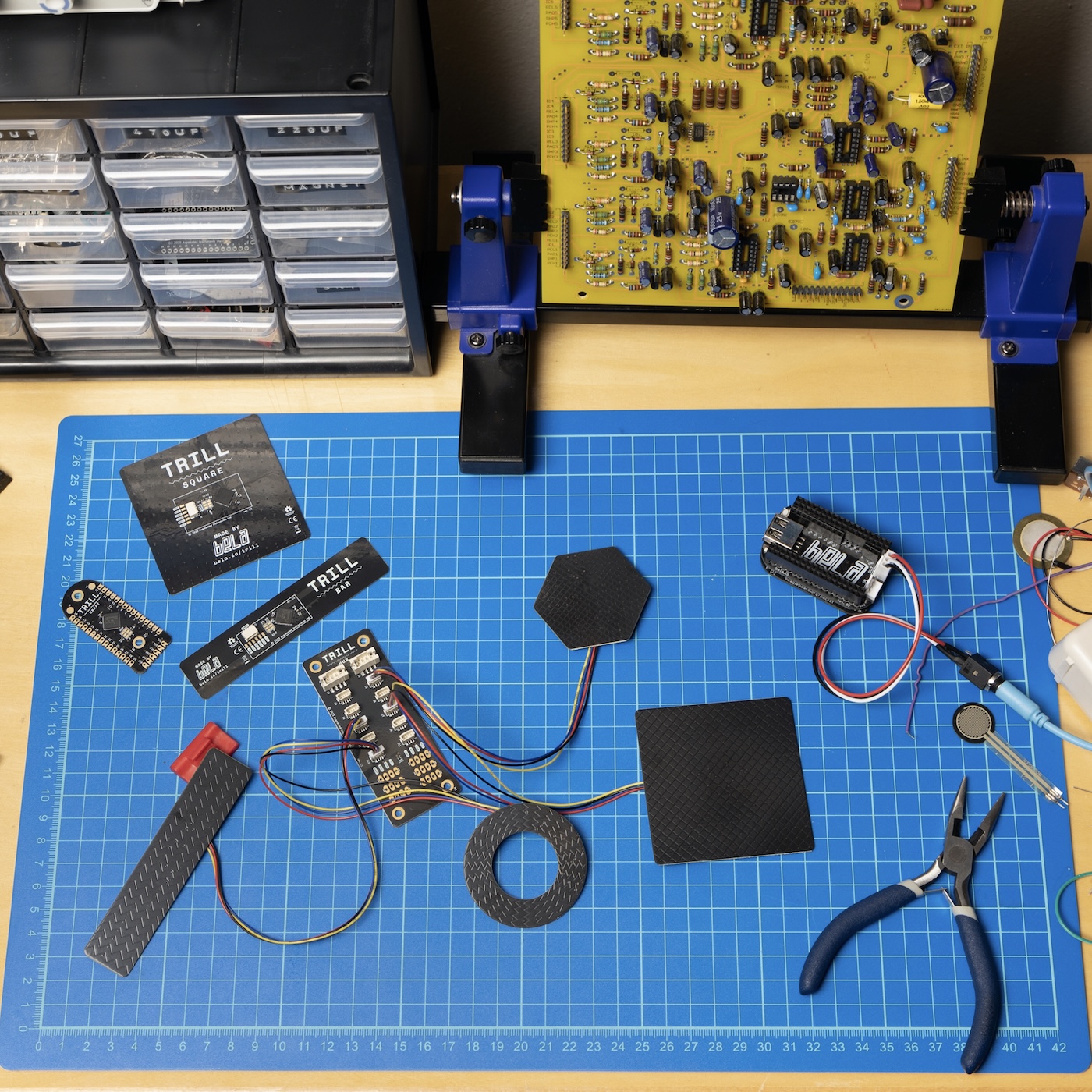
Trill Hub is a handy breakout board that provides a single point of connection for all your Trill sensors (and other I2C devices).
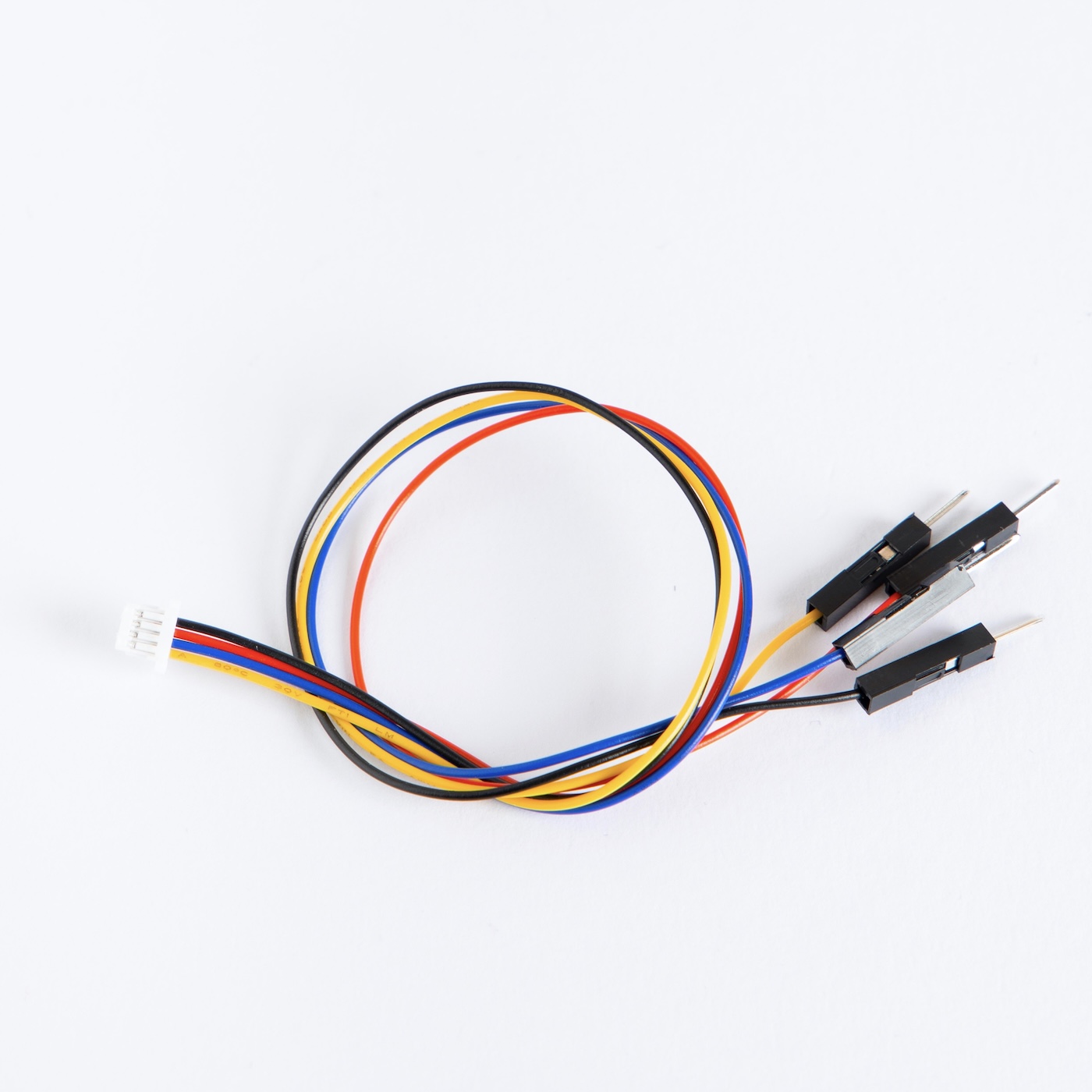
Trill Hub includes 5 QWIIC-to-QWIIC cables so you can securely hook up your Trill sensors, and then connect it to your board for a reliable, hassle-free connection. We’ve also included 6 sets of open solder pads on Trill Hub so you can also connect other I2C devices in your project that don’t use QWIIC connections.
Trill Hub also includes on-board pull-up resistors for the I2C lines, in case your board requires it (like some versions of Teensy), so no extra parts are needed for your setup.
To find out more about the I2C communication protocol and about using multiple Trill sensors together have a look at our all about I2C guide.
Manufacturers – please contact us for wholesale pricing